

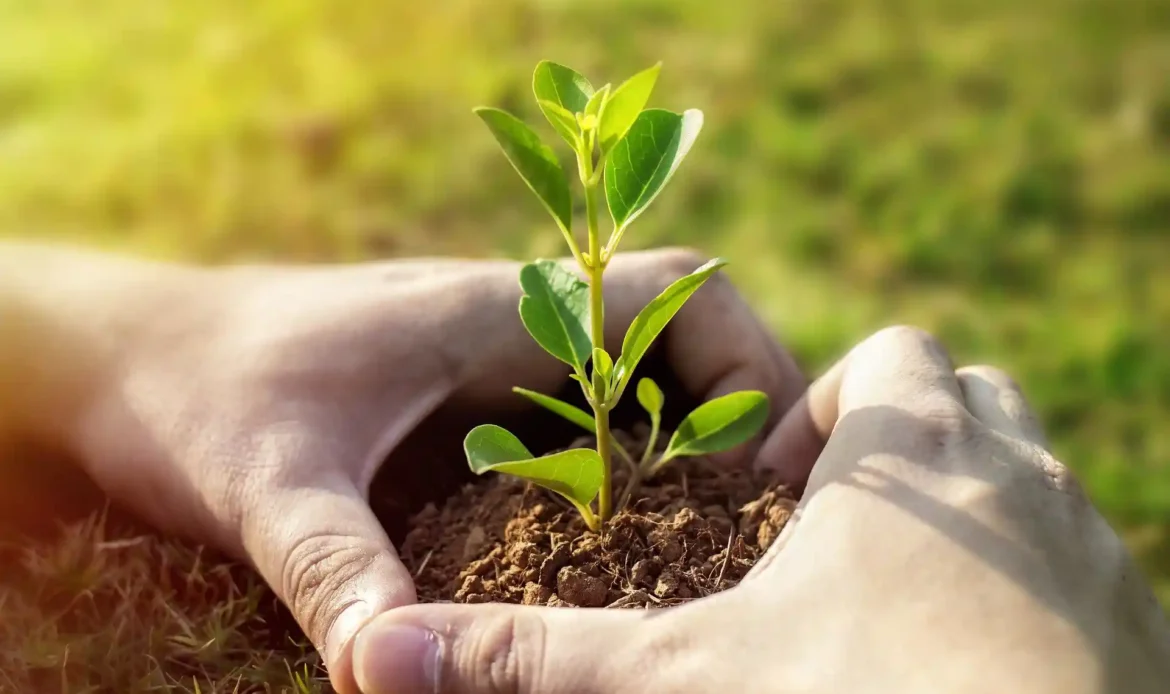
On November 6th, 2023, the government of Kenya declared November 13th, 2023, a National Public Holiday dedicated to a tree-planting and growing exercise led by President William Ruto. This announcement elicited different reactions, “A whole business day wasted! This must be a sick joke.” An ambitious businessman said, “What Is this old man saying, I finally have an extended weekend to chill and hang with my pals!” An energetic young lady retaliated. They both make a point, I mean, plenty of organizations, offices, and shops will have to shut down on that Monday automatically leading to losses in one way or another. On the other hand, with the speed at which the country and its rising economy are moving, a break to at least catch a breath is well deserved. However, the problem with the two citizens regarding their comments is the boundless ignorance of the significance of augmenting the tree cover in Kenya. This significance is principally tied to the climate change crisis which currently tops the list of emerging issues.
So, what is climate change, what causes it, and where does planting of trees come in?
Climate change refers to long-term shifts in atmospheric temperature and weather patterns. These shifts can either be natural; activities of the sun or due to human activities. These shifts affect not only our health but also our ability to grow food crops, construct housing, and go about our daily activities such as going to our places of work as well as school for us students.
But what causes the shifts? In a recent inquiry by the United Nations General Assembly, it was concluded that as per the current times, human activities are the main drivers of climate change primarily through the burning of fossil fuels like coal, oil, and cooking gas. This ‘burning of fossil fuels’ may sound like a complex term to a layman, however, you and I actively indulge in this hazardous activity. We do this by driving or riding in fuel Gas Cars; non-electric cars and trucks and dumping or burning plastic products. Other human activities that involve the burning of these fossil fuels include industrialization; Developing large Industrial Operations with Coal-fired power plants to generate energy, as well as the use of oil and natural gas to power ships and airplanes leading to air pollution through the release of greenhouse gases.
The term ‘greenhouse gas’ is inferred from the scientific concept better known as ‘the greenhouse effect’ which suggests that a layer of gases forms a cozy blanket close to the surface of the earth which then leads to heat being trapped in and encompassing planet earth. Examples of these greenhouse gases are Carbon (iv) Oxide, Methane, Nitrous Oxide, and Water Vapor, yes you read that right, water vapor! It exists in warm air hence absorbing heat from the earth which hinders condensation and eventually prevents heat from escaping the planet.
Is it possible to stop this greenhouse effect?
I bulge to pressure owing to the words of UN Secretary-General Mr. Antonio Guterres, the climate emergency is a race we are losing, but it is a race we can win. As intense as this entire climate crisis may seem, there is a way out. Climate change, global warming, the greenhouse effect, air, soil, and water pollution, none of these were spontaneous in their materialization. They are consequences of an incessant, steady but gradual process. Activities involved in this process include the generation of power from oil and gases, large-scale manufacturing of goods in industries, and overproduction and underconsumption of goods made of textile, plastic, and electronics which are non-biodegradable. This reckless and ignorant disposal of the goods mentioned above leads to water, air, and soil pollution and axiomatically results in the emission of greenhouse gases. Despite the human activities mentioned above having a gargantuan effect on the planet, there is one other activity that has catalyzed global warming: cutting down trees. Trees that have green leaves carry out photosynthesis which is a process whereby the leaves absorb sunlight and convert it into chemical energy which then converts water, carbon (iv) oxide, and minerals into oxygen and energy-rich organic compounds such as glucose. Enough of science. In a nutshell, a mature tree can have an average of between 100,000 and 200,000 leaves depending on the species and size of course. When trees are cut down and forests cleared then excess carbon (iv) oxide produced from human activities sits on the earth hence forming the said layer of greenhouse gases promoting global warming.
Research done by the World Resource Institute in 2022 showed that Russia, Canada, and the United States comprise more than half of the world’s tree gain with an astounding 68 million hectares collectively. However, all three countries have simultaneously lost more tree cover than they have gained between 2000 and 2022 hence an overall loss. This is the problem; the tree gain does not even cancel out the loss which further accelerates global warming. In Kenya, the constitutionally accepted forest cover is 10%. As of 2019, the statistics stood at 7.4%. A report by Global Forest Watch further shows that Kenya has lost over 50 kilo hectares of forest cover between 2000 and 2022 leading to increased carbon (iv) oxide concentration in the atmosphere. The announcement by the government dedicating an entire day to planting at least 50,000,000 trees countrywide is an attempt to redress deforestation in the country.
Can one person really make an impact in this fight against climate change?
The beautiful thing about making a difference in the world or initiating change is that it always starts with you. Recently, more than 100 countries at the United Nations Climate Change Conference in Glasgow pledged to rectify deforestation by 2030. This pledge received reproving counterblasts from numerous environmental organizations who claimed that similar measures have been futilely implemented before. I must admit that Law plays a sizeable role in environmental conservation. For instance, the Environment and Management Coordination Act of Kenya is the operative law on matters concerning environmental conservation and is Kenya’s first framework environmental law. In addition to this, Article 69(1) and 69 (2) of the Kenyan Constitution requires that every citizen and resident utilize the environment as well as natural resources for the benefit of everyone whilst protecting and conserving the environment to ensure ecologically sustainable development and use of natural resources. These natural resources include trees which are also needed in water catchment areas.
The message we are trying to pass here is that as much as implementation and interpretation of both international and domestic law are essential in combating climate change, our role as human beings is colossal. In the words of Dr. Jane Goodall, what you do makes a difference, and you must decide what kind of difference you want to make. A deep sense of fulfillment and interest can arise from an understanding of the world and its contents. In a nutshell, knowing how to defend the earth is a form of self-defense.
In conclusion, a tree planting day is an opportunity for each one of us to give back to the earth which has fed and accommodated us despite all the pain we have caused it. Planting one tree is a contribution to global reafforestation, it is a step towards restoring lost forests and repairing the damaged ecosystems while mitigating climate changes. Fun fact, a single mature tree can produce enough oxygen for a family of four to breathe for an entire year. Imagine how many human, animal, and plant lives you will save when you share this information with your friends, family, and colleagues and all engage in the tree-planting parade!